Phone Number and the internet
Phone Number and Internet Connectivity#
Modern telephony is no longer copper-bound.
Everything is IP-backed, database-controlled, and identity-scored.
Your “phone number” is:
- A database entry
- Linked to an IMSI
- Routed via IP infrastructure
- Reputation-scored by online services
This document threat-models the full stack.
1. Identity Stack Diagram#
Below is the real identity chain inside mobile networks:
        ┌──────────────────────────┐
        │        MSISDN            │
        │  (Your Phone Number)     │
        └─────────────┬────────────┘
                      │
                      ▼
        ┌──────────────────────────┐
        │          IMSI            │
        │  (Subscriber Identity)   │
        └─────────────┬────────────┘
                      │
                      ▼
        ┌──────────────────────────┐
        │          ICCID           │
        │  (Physical SIM ID)       │
        └─────────────┬────────────┘
                      │
                      ▼
        ┌──────────────────────────┐
        │          EID             │
        │  (eSIM Chip ID)          │
        └─────────────┬────────────┘
                      │
                      ▼
        ┌──────────────────────────┐
        │          IMEI            │
        │  (Device Modem ID)       │
        └─────────────┬────────────┘
                      │
                      ▼
        ┌──────────────────────────┐
        │        Cell Tower        │
        └─────────────┬────────────┘
                      │
                      ▼
        ┌──────────────────────────┐
        │      Carrier Core        │
        └─────────────┬────────────┘
                      │
                      ▼
        ┌──────────────────────────┐
        │        Internet          │
        └──────────────────────────┘
Key Reality:
- The network primarily tracks IMSI
- The device is identified by IMEI
- The number (MSISDN) is just a routing alias
Changing one layer does not remove linkage unless aligned with other layers.
2. eSIM Provisioning Flow Diagram#
User scans QR Code │ ▼ SM-DP+ Server (Profile Server) │ │ (EID identifies eSIM chip) ▼ Profile Downloaded │ │ (Profile contains IMSI + carrier data) ▼ eSIM Activated │ ▼ Modem authenticates using: IMEI + IMSI
Important:
- EID identifies the eSIM hardware
- IMSI identifies the subscriber
- IMEI identifies the modem
- MSISDN maps to IMSI in carrier database
3. Threat Model Matrix#
Below is a structured comparison of common connectivity models.
Legend#
- ✅ = Strong advantage
- ⚠️ = Partial / situational
- ❌ = Weak / exposed
A. Physical SIM (KYC)#
| Threat Vector | Exposure Level | Notes |
|---|---|---|
| Carrier tracking | ❌ High | IMSI tied to legal ID |
| IMEI logging | ❌ High | Historical device mapping |
| SIM swap risk | ⚠️ Medium | Mitigated with carrier PIN |
| Stingray attacks | ❌ High | Radio-layer exposure |
| SMS interception | ❌ High | Plaintext at interconnect |
| Service acceptance | ✅ High | Trusted as “mobile” |
| Anonymity | ❌ Very Low | KYC-bound |
B. eSIM (KYC)#
| Threat Vector | Exposure Level | Notes |
|---|---|---|
| Carrier tracking | ❌ High | Same as physical SIM |
| Remote provisioning attack | ⚠️ Medium | SM-DP+ trust dependent |
| IMEI logging | ❌ High | Same baseband behavior |
| Profile rotation | ⚠️ Possible | If new IMSI issued |
| Service acceptance | ✅ High | Appears as mobile |
| Anonymity | ❌ Low | Usually KYC |
C. Data-only eSIM + VoIP Number#
| Threat Vector | Exposure Level | Notes |
|---|---|---|
| Carrier subscriber identity | ⚠️ Medium | Data IMSI separate from voice |
| IMEI linkage | ⚠️ Medium | Still visible to carrier |
| Stingray exposure | ⚠️ Medium | Data-only still attaches to tower |
| SMS plaintext | ⚠️ Depends | VoIP SMS often routed via SIP |
| Service rejection | ❌ High | Often flagged as VoIP |
| KYC requirements | ⚠️ Depends | Jurisdiction-specific |
| Local radio identity | ❌ Present | Still cellular |
D. Public WiFi + Virtual Number#
| Threat Vector | Exposure Level | Notes |
|---|---|---|
| Carrier tracking | ✅ None | No SIM attached |
| IMSI exposure | ✅ None | Airplane mode possible |
| IP logging | ❌ High | WiFi operator logs |
| Physical attribution | ⚠️ Moderate | CCTV + time correlation |
| Service rejection | ❌ Medium | VoIP flagged often |
| Local radio attack | ✅ None | No baseband usage |
| SMS plaintext | ⚠️ Depends | VoIP routing path |
E. Home WiFi + VPN Router#
| Threat Vector | Exposure Level | Notes |
|---|---|---|
| ISP attribution | ❌ High | ISP knows address |
| Public IP visibility | ✅ Low | VPN masks exit |
| IMSI exposure | ✅ None | If no SIM used |
| Metadata logging | ⚠️ VPN dependent | Trust shifts to VPN |
| Service acceptance | ⚠️ Depends | VPN IP reputation |
| Physical location leakage | ❌ High | Subscriber tied to address |
4. Identity Rotation Strategy Matrix#
| Strategy | Effective Against | Ineffective Against | Risk |
|---|---|---|---|
| Change IMEI only | Historical device linkage | IMSI tracking | Carrier anomaly detection |
| Change IMSI only | Subscriber history | IMEI logging | KYC persistence |
| Change EID only | eSIM hardware trace | Carrier logs | Minimal benefit |
| Rotate IMEI + IMSI + EID | Long-term carrier correlation | Real-world surveillance | Operational complexity |
| Use virtual number | Radio-layer attacks | Database scoring | Service rejection |
| Remove SIM entirely | IMSI tracking | IP attribution | WiFi logs |
5. Attack Surface Summary#
Radio Layer Risks#
- IMSI catchers
- Downgrade attacks (2G)
- Baseband exploits
- Tower triangulation
Mitigation:
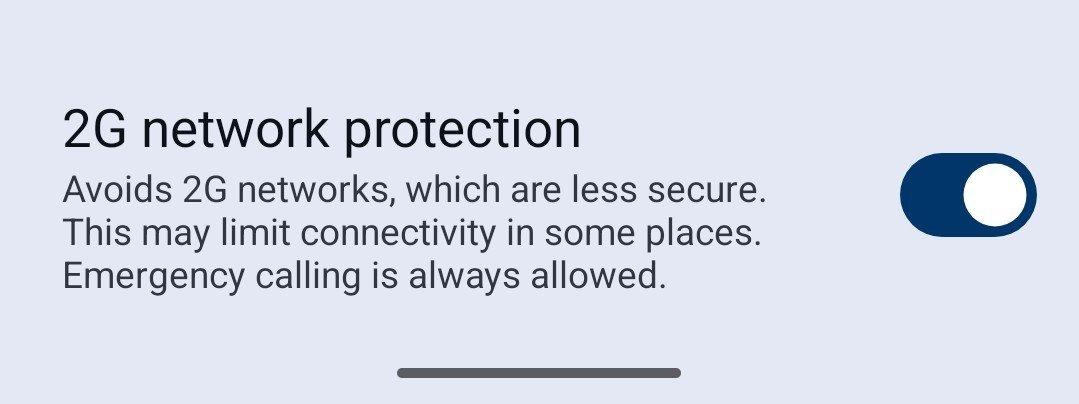
- Disable 2G
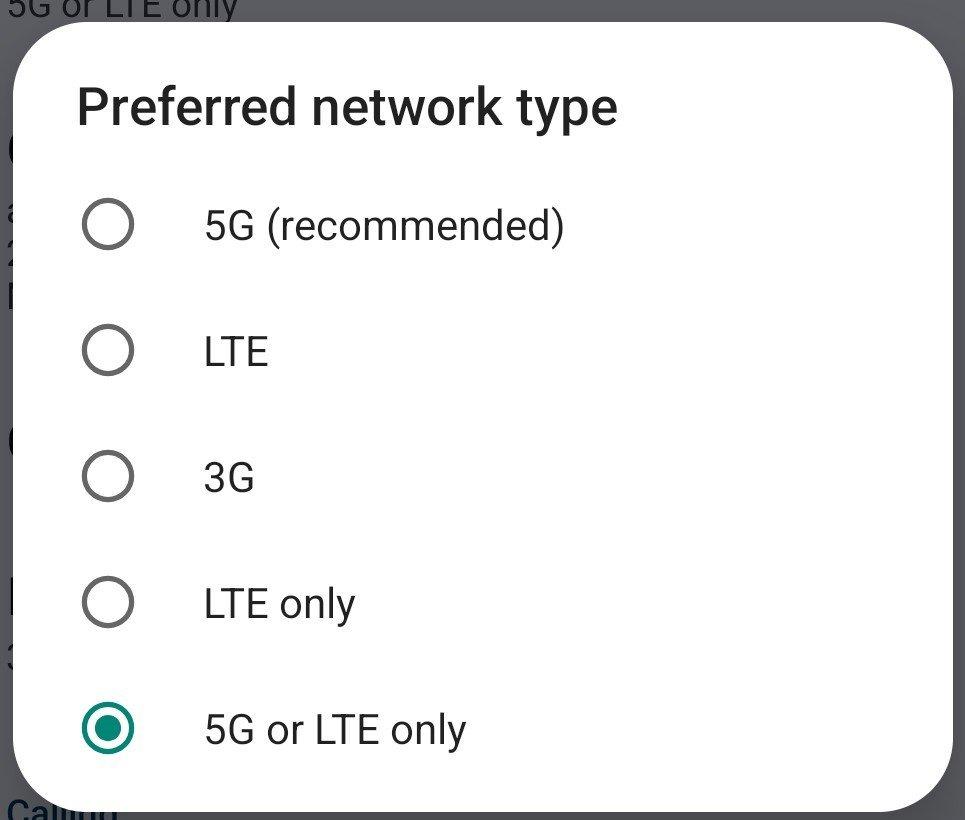
- Force LTE/5G only
- Keep baseband updated
- Airplane mode when possible
Network Layer Risks#
- ISP logging
- VPN logging
- Public WiFi logging
- IP reputation scoring
Mitigation:
- Router-level VPN
- IP rotation
- Avoid KYC-bound WiFi portals
Application Layer Risks#
- SMS OTP
- SIM swap
- Account recovery abuse
- Metadata correlation
Mitigation:
- Hardware security keys
- TOTP instead of SMS
- Compartmentalized SIM roles
6. Core Insight#
There is no magic SIM.
There is no magic carrier.
There is no magic IMEI trick.
There are only tradeoffs between:
- Metadata exposure
- Legal identity binding
- Radio-layer visibility
- Platform trust heuristics
- Operational complexity
Privacy comes from:
- Compartmentalization
- Minimization
- Jurisdiction awareness
- Removing SMS as root identity
- Aligning identifier rotation correctly
Everything else is optimization.
Optional Additions#
Future expansions could include:
- Probability modeling of IMEI collision
- Carrier fraud scoring mechanisms
- Detailed RCS vs SMS trust boundary diagram
- Lawful intercept architecture overview
- Stingray protocol flow breakdown
Phone Number and Internet Connectivity
The modern phone number is no longer what people think it is.
Copper is being replaced by fibre. The traditional PSTN is being phased out in many countries. Nearly everything is now IP-based, routed over TLS at some layer, and provisioned via centralized servers.
Your “phone number” is no longer tied to a wire — it’s tied to databases.
- No SIM, No Problem?
A device without a SIM:
Cannot attach to a carrier network
Cannot expose IMSI
Cannot be triangulated by cell towers
Still connects over Wi-Fi
This reduces mobile-layer exposure but does not make you anonymous. Your identity moves to:
IP address
Device fingerprint
Accounts
Behavioral patterns
Removing a SIM removes radio identity, not network identity.
- VPN on the Router
Running a VPN at the router level (e.g. GL.iNet Mudi V2) provides:
Network-wide tunneling
IP masking for all connected devices
Device-level isolation
However:
Carrier still sees IMSI + IMEI
VPN provider sees exit traffic
Mobile metadata still exists if using cellular uplink
A buffer router between your phone and ISP is generally good practice.
- “Zero Click” & Local Attacks
Zero-click attacks exploit:
Baseband firmware
Messaging parsers
VoIP stacks
Stingrays / IMSI catchers exploit:
Downgrade attacks (2G)
Weak authentication in legacy protocols
Mitigation in GrapheneOS:
Disable 2G
Force LTE-only / 5G-only
Avoid automatic downgrades
The attack surface shrinks significantly when legacy protocols are removed.
- What Is (and Isn’t) a “VoIP” Number?
Today, almost all telephony is IP-backed.
Even traditional carriers use VoIP internally.
So what does “VoIP number” mean?
It usually means:
A number allocated from providers classified as “non-wireless” or “virtual” in commercial carrier databases.
Services check databases (e.g., carrier lookup APIs) and flag numbers as:
Mobile (good)
Fixed line
VoIP (often rejected)
High-risk / disposable
Heuristics include:
Carrier type
Area code reputation
Prior abuse signals
Two numbers from the same provider may be treated differently.
This is not technical — it’s policy.
- How eSIM Works
An eSIM is provisioned over the internet.
Flow:
You scan QR code.
Device contacts SM-DP+ server.
EID identifies the chip.
Profile containing IMSI is downloaded.
Modem uses IMEI + IMSI to authenticate.
Once provisioned, it behaves like a normal SIM.
Important identifiers:
IMEI → identifies modem
IMSI → identifies subscriber
ICCID → identifies SIM
EID → identifies eSIM chip
MSISDN → phone number
The network primarily tracks IMSI, not IP.
- A New Carrier Doesn’t Solve Much
Switching carriers:
Does not remove radio-layer tracking.
Does not prevent lawful intercept.
Does not stop metadata logging.
It only changes who logs you.
- KYC Reality
Many countries require ID for SIM activation.
If KYC is mandatory:
Avoid highly centralized IDs where possible.
Don’t use your most globally traceable document unless required.
Understand local SIM registration laws before travel.
Some countries offer prepaid anonymity. Others don’t.
- Defeating PSTN (Or Trying To)
PSTN calls and SMS are plaintext at various interconnect points.
Even when signaling is secured, SMS:
Is store-and-forward
Often unencrypted end-to-end
Accessible to operators
Some countries are shutting down copper PSTN, but that does not mean SMS becomes encrypted.
It just becomes IP-transported plaintext.
- SIM Swap Defense
To reduce SIM swap risk:
Enable carrier-level 2FA / PIN
Remove SMS as account recovery where possible
Use app-based TOTP or hardware keys
Your phone number should not be your root identity.
- SIM Operational Security
Segmentation model:
Banking SIM
Government ID SIM
Public / Misc SIM
Do not mix roles.
Compartmentalization > rotation.
- IMEI: Should You Change It?
IMEI structure:
8 digits TAC (device model)
6-digit serial
1 Luhn checksum
Changing IMEI:
Breaks historical linkage
Removes prior SIM association
Resets device fingerprint at carrier layer
But risks:
Carrier anomaly detection
IMEI mismatch patterns
Duplicate TAC/serial conflicts
The real tracking anchor is IMSI.
If you rotate IMEI but keep IMSI constant, nothing meaningful changes.
If rotating, do it aligned with:
New IMSI
New EID
New profile
Frequent random changes can make you more suspicious, not less.
Blend into a large device population.
- IP Address: Mobile vs WiFi
Mobile:
IP changes frequently
Location triangulation possible
Identity = IMSI
WiFi (home):
IP changes less frequently
ISP knows your address
Stable subscriber identity
Public WiFi:
Harder physical pinpointing
But logs MAC + time + possibly onboarding data
If you give real identity to public WiFi onboarding: Static IP + KYC = strong attribution.
Mobile identifies the SIM. WiFi identifies the subscriber.
Choose your threat model.
- Virtual Numbers vs Physical SIM
Virtual number advantages:
Not tied to IMEI
No exposure to local IMSI catchers
Often no KYC (jurisdiction dependent)
Disadvantages:
Often flagged as VoIP
SMS still plaintext
Limited country availability
In some regions, virtual numbers are restricted.
Sometimes you must bridge:
Bank OTP
Government messages
This is where services like US/UK virtual number providers come in.
But availability is geography-dependent.
- Voice: VoNR, VoWiFi
Modern voice paths:
VoLTE
VoNR (5G standalone)
VoWiFi
All are IP-based.
But signaling metadata still exists.
Voice encryption at radio layer ≠ end-to-end encryption.
- SMS vs RCS vs Encrypted Messaging
SMS:
Plaintext
Carrier-readable
RCS:
Often encrypted only within vendor ecosystems
Not universal
True E2EE:
Signal
Similar modern messengers
Banks and governments still rely heavily on SMS.
This is a systemic weakness.
- Local Attacks & Downgrades
Defenses:
Disable 2G
Avoid auto network switching
Keep baseband updated
Prefer devices with hardened OS (e.g., GrapheneOS)
Android 16 + improved radio HAL may reduce downgrade vectors.
- Online Identity Strategy
Many services treat US numbers more favorably.
Jurisdiction affects:
Number acceptance
Fraud scoring
Access to services
Your MSISDN is reputation-scored.
Not all countries are equal in platform trust heuristics.
- The Real Takeaway
There is no magic SIM. There is no magic carrier. There is no magic IMEI trick.
There are only tradeoffs between:
Metadata exposure
Legal identity
Radio-layer tracking
Platform trust scoring
Usability
Privacy is achieved through:
Compartmentalization
Minimization
Jurisdictional awareness
Reducing single points of identity
Avoiding SMS as root authentication
Everything else is optimization.
Phone Numbers and the Internet: Privacy, Security, and Operational Considerations in 2026Whitepaper Author: Compiled from Security Brahh analysis and verified sources Date: February 22, 2026 Version: 1.0 AbstractPhone numbers remain a critical bridge between physical identity and digital services, yet they expose users to surveillance, SIM-swapping, location tracking, and VoIP heuristics. This whitepaper consolidates technical realities of cellular networks, eSIM provisioning, PSTN migration, IMEI management, and IP-based alternatives. It provides actionable opsec recommendations for privacy-conscious users on GrapheneOS, custom routers (e.g., GL.iNet MudiV2), and no-SIM setups. Key findings: traditional SIMs are obsolete for high-threat models; all-IP networks (VoIP/5G) improve encryption potential but centralize new risks; disciplined rotation and compartmentalization remain the strongest mitigations.1. No-SIM Connectivity: The Gold Standard for Local Threat ModelsEliminating the SIM entirely removes the primary vector for carrier-level tracking (IMEI + IMSI linkage, tower triangulation, GNSS pings).Core Setup (The Hated One model, 2024–2026):GrapheneOS device in permanent airplane mode (or no SIM/eSIM inserted). All traffic over trusted public Wi-Fi + full-device VPN (Mullvad/Proton) or Tor. Communication: Signal / Matrix / Session (E2EE). Rare voice/SMS needs: Offline “dumbphone” (e.g., Nokia feature phone) powered only when required, stored in Faraday bag. Data: Pre-download offline maps/content; public Wi-Fi ubiquitous in urban areas.
Privacy GainsNo IMSI/IMEI exposure to carriers. Location reduced to Wi-Fi AP spherical radius (vs. meter-level cellular + GNSS). Zero persistent carrier metadata.
Limitations: Inconvenient for always-on mobile data or banking/government OTPs.2. eSIM Provisioning Mechanics and VulnerabilitiesHow eSIM Works
sequenceDiagram participant User participant Device_LPA participant SM_DP_Plus participant eUICC User-»Device_LPA: Scan QR (SM-DP+ address + token) Device_LPA-»SM_DP_Plus: EID + authentication request (TLS) SM_DP_Plus-»Device_LPA: Encrypted profile (IMSI, Ki, 5G keys) Device_LPA-»eUICC: Install profile (ISD-P) eUICC–»Device_LPA: Confirmation
LPA (Local Profile Assistant) runs with high privileges. SM-DP+ (remote server) generates profile. EID (Embedded Identity) uniquely identifies the eUICC chip. Once installed, behaves like physical SIM (IMEI + IMSI pair).
Major Vulnerabilities (2025–2026)eSIM Swap — Social engineering carrier support with breached PII. QR Code Theft — Interception via email compromise. Privileged Malware — Zero-click (Pegasus-class) control of LPA → silent profile injection. Untrusted SM-DP+ — Travel eSIM resellers often route through Chinese/Hong Kong infrastructure (Northeastern University study, 2025): IMSI exposure + ~800 m location accuracy in some cases. OpenRSP (Blockchain-Powered eSIM) proposal: decentralizes SM-DP+ via smart contracts + ZKPs for trustless, user-controlled provisioning (still WIP, GPL-3.0).
Hardware AdaptersJMP.chat eSIM adapter (ST33G1M2 chip in SIM form factor) — loads any profile via JMP SIM Manager app. 9eSIM V3 card + reader — stores up to 50 profiles (1.5 MB), lpac support on Android/PC/iOS.
Mitigation: Rotate entire profile + EID + IMEI together; use only reputable providers (Silent.Link, JMP Data); always VPN; prefer data-only plans.3. PSTN Switch-Off and the All-IP Reality (2026 Status)Copper PSTN is being globally replaced by fiber + VoIP. Voice/SMS now travel over TLS-encrypted IP in most new deployments.Global Timeline (selected):Region Status Full Switch-Off UK (BT) Delayed Jan 2027 Netherlands Completed — Germany Completed (phased) — Estonia Completed — Japan Ongoing 2026–2027 Singapore Completed —
ImplicationsPlaintext PSTN era ending → SMS/voice now at least transport-encrypted. RCS E2EE (Apple iOS 26.4 beta, Feb 2026) emerging but limited (mostly iOS-to-iOS; Google extension server-dependent). WhatsApp/Messenger E2EE increasingly used by banks/governments as PSTN replacement.
Recommendation: Treat any number that touches legacy PSTN as plaintext; prefer pure VoIP/XMPP bridges.4. VoIP vs “Real” Carrier Numbers and Detection HeuristicsServices (banks, Google, Meta, PayPal, etc.) block “bad” VoIP via:NPA-NXX block lookup. NPAC database queries. Carrier reputation + location heuristics. IP geolocation cross-check.
Cloaked.app Model — Real numbers via routing/forwarding (4-number chain: recipient → Cloaked # → personal # → routing #). Still flagged as VoIP by many sites.Best Persistent Options (2026)JMP.chat — US/CA/UK numbers, XMPP/Cheogram integration, eSIM adapter, Monero-friendly, low rejection rate once aged. Silent.Link — Data-only anonymous eSIMs, crypto payments, no expiration. Port physical SIM → VoIP (Google Voice, JMP) to inherit “good carrier” reputation.
Database Resourcesesimdb.com — Mobile data plan catalog. freecarrierlookup.com — Carrier type checks.
- IMEI Management and Rotation OpsecIMEI (15 digits): TAC (8) + serial + Luhn check digit. Changing IMEI erases carrier history tied to modem but must match device TAC for low collision probability (<0.001 until ~99k units of same model).Recommended Workflow (MudiV2 + Blue Merle)
flowchart TD A[Acquire new eSIM profile/EID] –> B[Change IMEI via Blue Merle LuCI before activation] B –> C[Activate profile on router/phone] C –> D[Use for session] D –> E[Dispose profile + EID] E –> F[Change IMEI again] F –> G[New adapter/profile cycle]
Legal in most jurisdictions for personal privacy use (no fraud intent). GrapheneOS recommendation: avoid unless aligned with other metadata. Tools: Blue Merle firmware on GL.iNet (enables AT commands on supported modems), OpenEUICC, lpac.
Collision Probability — Negligible for popular models (<1/100,000 per TAC).6. Mobile IP vs Wi-Fi: Location Privacy ComparisonFactor Mobile Data Public Wi-Fi Home Wi-Fi Location Accuracy Tower triangulation + GNSS (meters) AP spherical radius (hundreds of m) Exact address Tracking Vector IMEI/IMSI (persistent) MAC (randomized) + dynamic IP Static IP + ISP logs Visibility to Sites ISP public IP ISP public IP ISP public IP Best For When proxying Daily opsec Avoid
Rule: Public Wi-Fi + VPN > mobile data for location privacy when not using paid residential proxies.7. KYC, Compartmentalization, and Country-Specific Reality185/245 countries require SIM registration (passport/biometrics in 13). Exceptions (no KYC): USA, Canada, Mexico, Chile, etc.SIM Opsec TiersBanking/government — Dedicated physical/eSIM with minimal KYC ID. High-privacy daily — Data-only anonymous eSIM (Silent.Link) + JMP US number bridge. Throwaways — smspool.net / temporary VoIP.
Emergency Calls — Still require valid SIM profile in most jurisdictions.8. Router-Centric Stack (Recommended Endgame)GL.iNet MudiV2 (GL-E750v2) + Blue MerleKernel 5.10.176+. eSIM support via lpac. IMEI change via LuCI → Network → Blue Merle. WireGuard + VPN Hotspot. Starlink as upstream buffer (GPS-disablable, ~24 km location blur).
Full Chain Starlink → MudiV2 (Blue Merle) → WireGuard → Devices (GrapheneOS, no SIM).9. DiagramseSIM Provisioning Flow (see Section 2)IMEI Rotation Workflow (see Section 5)Connectivity Privacy Hierarchy
graph TD A[No SIM + Public Wi-Fi + VPN] –> B[Data-only eSIM + JMP VoIP bridge] B –> C[Physical SIM compartmentalized] C –> D[Legacy PSTN number]
Conclusion and Actionable ChecklistDefault to no SIM wherever possible. For persistent numbers: JMP.chat (US identity) + eSIM adapter. Rotate EID + profile + IMEI together on supported hardware. Use data-only anonymous eSIMs (Silent.Link preferred) behind VPN. Migrate off PSTN-dependent services; push for WhatsApp-style E2EE in banking/government. Compartmentalize: separate SIMs for banking / gov / daily. Monitor OpenRSP and decentralized eSIM projects for long-term sovereignty.
Phone numbers are legacy identity anchors in an IP world. Treat them as disposable bridges, never as persistent personal identifiers.References (key sources consulted)The Hated One – “Why I don’t use a SIM card” (YouTube, 2024) Cloaked.app help articles (routing mechanics & VoIP rejection) PrivacyGuides threads on JMP, Silent.Link, travel eSIMs, mobile options Northeastern University eSIM routing study (USENIX Security 2025) BT Group / global PSTN switch-off reports PhoneTravelWiz SIM registration database OpenRSP GitHub repository an.dywa.ng carrier GNSS analysis Letters.EmpireSec JMP & Starlink deep-dives Wikipedia (PSTN, IMEI) and GSMA references
This document is licensed under CC-BY-SA 4.0. Distribute and improve freely. Feedback welcome.
no SIM#
https://www.youtube.com/watch?v=4Dei2buz1X0
VPN on the router#
Zero Click?#
What is not a “VoIP” number#
worldwide the copper is being replaced by fibre and with it, everything is TLS. So VoIP is basically all numbers rn and systems test for “good” carriers.
https://www.freecarrierlookup.com
if a Product or a service’s DB thinks that your number is from a good carrier, the services allow that number.
More heuristics maybe at play because one number may work as non-VoIP and other may not from same carrier, maybe area codes at play also.
but mostly the Phone Numbers are being allocated on servers and fibre, note the PSTN is still copper i. e. free text.
https://help.cloaked.app/hc/en-us/articles/11841989344404-How-do-Phone-Calls-and-Text-Messages-Work
https://help.cloaked.app/hc/en-us/articles/20683558341780-Why-do-some-sites-reject-Cloaked-numbers
how does an esim Functions?#
https://discuss.privacyguides.net/t/what-is-a-jmp-chat-esim-adapter/19165/14
In the case of an esim adapter, the provisioning of esim profile takes place over the internet, lpac gets the profile from rsp server like G+D, IDEMIA, thales, by feeding the EID and IMSI gotten from sm-dp+ server hostname in the esim QR code.
once the esim is provisioned, the adapter functions like a normal sim, IMEI of the modem and IMSI of the sim is used to communicate with the carrier.
A new carrier doesn’t solve anything#
Pricing#
https://discuss.privacyguides.net/t/anyone-here-tried-pikasim-for-anonymous-esims-legit-or-not/33760
https://discuss.privacyguides.net/t/virtual-phone-number-for-graphene-os-user-no-esim/33367/6
https://wiki.soprani.ca/EuropeanNumberProviders
Database of per-country code “VoIP” Provider#
github link like bank reports GOS
https://discuss.privacyguides.net/t/mobile-internet-options/19080
eSIM vulnerabilities?#
https://youtube.com/watch?v=1cEMUlrpu7o
https://discuss.privacyguides.net/t/need-help-the-vulnerability-of-esim-this-bad/35209
https://github.com/Blockchain-Powered-eSIM/OpenRSP
https://discuss.privacyguides.net/t/data-only-esim-provider-local-ip-breakout/34542
https://discuss.privacyguides.net/t/issue-with-no-kyc-esim-provider/34792/3
https://discuss.privacyguides.net/t/experience-with-silent-link/19242/14
Emergency Calls#
Online Identity#
Its far better to have an American Identity on the internet as services will treat you better and US laws are somewhat forgiving.
so jmp.chat is nice
Local Attacks#
Data Only SIM#
ss7 can still be used for fraud - make illegitimate calls/sms,disable usage limits, rack up the bill.
Location#
phone# -> Anytime Integration interrogation (ATI) -> Location
phone# -> SRI -> IMSI -> PSI -> Location
KYC#
if you have to buy a sim with kyc, buy it with an ID that makes it difficult to centralize tracking
for eg, don’t use a passport
in India, don’t use Aadhar
https://www.phonetravelwiz.com/phone-travel-options/sim-card-registration/
Airplane Mode#
switch off all radios
defeat the PSTN#
https://www.uctoday.com/unified-communications/bt-group-delays-pstn-switch-off/
https://www.yay.com/blog/voip/global-pstn-switchoff-learnings/
https://business.bt.com/why-choose-bt/insights/ip-technology/ip-what-we-can-learn/
https://www.mila.is/um-milu/frettasafn/nidurlagning-koparheimtaugakerfis-milu
SIM Swap#
have 2fa with your operator
SIM opsec#
- sim for banking
- sim for gov ID
- sim for others
SIM Lock#
2FA#
Banks still use sms as verification mechanism, inbound sms can’t still be used to hack accounts if 1FA is not known - so use strong passwords and have email opsec
Email and password OPSEC#
- banking email - firstnamelastname protonmail
- non-banking email - random passphrase
- audience email - forward email
- backend email 1 - critical accounts (TUta)
- backend email 2 - non critical accounts (Proton)
https://letters.empiresec.co/p/pass
IMEI#
Should you change your IMEI on your devices?
GOS says you shouldn’t because there are other carrier metadata that if not aligned to the IMEI, the device becomes more identifiable and raise some eyebrows. I beg to differ.
Most modems lock the capability to change the IMEI. Contrary to popular opinion on the internet, changing imei isn’t something countries have made laws against.
I am pretty sure in USA, it’s legal, and reading other countries’ particular laws, there is not really a mention of IMEI spoofing.
There are a very small number of devices in which you can issue “AT” commands to change the IMEI. eg mudiV2 router with blue-merle, google pixels with samsung exynos modems (pixel 6 and above), some other routers.
IMEI is a 15 digit number that identifies your mobile, more precisely your mobile’s modem which is issued by a regulatory body like gsma.
The first 8 digits is a TAC code which identifies brand, model, manufacturing origin, and network capabilities. The last digit is the Luhn check digit, which is used for integrity check. The middle digits is a serial number often allotted by the manufacturer.
To produce a viable IMEI for a device you need its TAC and the Luhn algorithm.
Luhn algo is in public domain but you need a TAC database or at least your device’s TAC. (Which you can find from the stock IMEI which you should write it down somewhere for safe keeping or when/if you want to return to stock IMEI for whatever reasons)
You can use a generator like imei(dot)info or create your own program/do it with hand.
Changing IMEI basically erases your past history, which sim’s you used, when you used them, also if you bought the device with your legal name, somewhere that record is also stored.
But changing your IMEI frequently can alert the carrier operator and trace your IMSI. IMSI is the ID given by the carrier network to the device. IMSI is linked to the billing details & kyc. a SIM is practically eCCID + IMSI.
SIM manufacturers give the chip an eccid, while the carrier gives it imsi. IMSI is a permanent number attached to your sim but carrier networks often use tmsi which is temporary.
What ICCID is to a sim card, EID is to an eSim. An eSim profile contains the IMSI and other data to connect to the carrier.
So what you want to do is this: change imei per eid for a particular IMSI.
Dispose off the EID, dispose off the profile, change IMEI and get new eSim Adapter, and a new profile from time to time.
The main problem is, using an imei that another device is using in the same carrier. The probability of that happening is pretty low (see Appendix)
But ensure that you are using a device that is being used by a lot of people to have a crowd to hide in.
Appendix A: Probability of IMEI collision
The probability of imei collision is basically proportional to 1/(100,000 - the number of your model’s sold.)
But kindly note if the number of the same model sold approaches 100,000, the brand will probably ask for a new TAC.
So the graph is highly zoomed in on the y axis and value ranges from 0 to 1 , the first value is 1/100,000 and increase expenonentially till there is new issue of TAC then again it will start at 1/100,000.
Also note that for probability to be 0.001 the number of devices needs to be 99,000.
So you have less than a 1 in a thousand chance for x < 99,000.
And it would be okay to assume after that point, a new TAC will be issued.
So we prove for most cases IMEI collision is miniscule.
Appendix B:
MSISDN is a code made with your country code and your mobile number. MSISDN is basically the parameter through which the packets are transmitted to the correct destination.
https://en.wikipedia.org/wiki/International_Mobile_Equipment_Identity
IP#
Which IP address should you choose?
Mobile v. WiFi
The public don’t see your IP address, they can only see ISP’s internal LAN’s IP.
Your internal IP changes in both Mobile and WiFi, because most residential connections are dynamic not static.
Mobile’s IP changes more, because well, it has to connect to the nearest tower, so if you are travelling, the connection gets reset and your IP changes more frequently.
On the other hand, WiFi’s IP may not change for days if you don’t switch on/off it, ISP may reset it from their end if they want but the IP usually changes whenever the router restarts.
in WiFi’s case, your home address is basically doxxed by the ISP.
But if you use a cafe or McDonald or airport WiFi or whatever, it’s very difficult to pinpoint where you are - the Wifi can only give them a Spherical region where you can be.
On the other hand, If you are using a mobile IP, its way easier to pinpoint your location because towers can triangulate.
But in the case of mobile, they track through IMEI & IMSI not the IP.
Change those from time to time.
Clearly public WiFi’s are better than mobile but if you are buying a Proxy, then the reverse is true.
in mobiles, they can pinpoint you but they may never know who you are, in public WiFi, they can identify you because, remember, the IP is static there.
Also don’t give PII to public WiFi onboarding lol. Static IP + kyc - > they have your identity.
jmp.chat
https://letters.empiresec.co/p/number
one-time verification#
smspool.net
Showing off the soon-to-be-released in-app onboarding flow for JMP from Cheogram Android, including setting up a Snikket instance! pic.twitter.com/xcXLG8muVR
— JMP (@JMP_chat) April 18, 2023
https://www.9esim.com/product/strengthen-package/
https://en.wikipedia.org/wiki/Public_switched_telephone_network
https://an.dywa.ng/carrier-gnss.html
https://github.com/srlabs/blue-merle/blob/main/Documentation.pdf
In Graphene OS:
Network & Internet > SIMs > Select SIM:
gl-inet mudiV2 (gl-e750v2)#
GOS has 400k devices, given by a ping to their servers.
but the anonset depends upon per country per operator/carrier
https://dl.gl-inet.com/router/e750/beta
5.10.176 kernel https://lwn.net/Articles/926874/
from:@GrapheneOS hotspot
https://x.com/GrapheneOS/status/1946230891648254445?s=19
https://x.com/GrapheneOS/status/1905844919287112181
https://x.com/GrapheneOS/status/1753329219407331488
https://x.com/GrapheneOS/status/2004699245606220207
https://x.com/GrapheneOS/status/1846712535480774794
https://docs.gl-inet.com/router/en/4/faq/repair_network_or_reset_firmware/
https://github.com/openwrt/luci/wiki/Documentation
change password of wifi
change ssid
wiregaurd config
disable LCD password and Wifi SSID
https://github.com/srlabs/blue-merle
install blue-merle > 9esim > silent.link profile, change imei from System > Advanced Settings (LuCi) > Network > blue merle before enabling new Profile (can be done via jmp esim manager)
toggle button > sim on/off
battery#
I always wondered whether having a “virtual number” better than a “normal SIM”. Because you can always get prepaid / burner phones.
A virtual number can protect you from local attacks / stringrays. It isn’t attached to an IMEI/ your device or an EID and hopefully no kyc.
But calls and SMS are in plain text anyhow so using sim’s other than, for internet doesn’t make sense. Depending on your country there is of course kyc in getting SIM’s. So just use silent(dot)link?
But in different countries you get Bank OTP’s and other governmental messages through SMS, so you need a bridge.
That’s where jmp(dot)chat guys come in, but its just US, Canada, and UK numbers for now. I heard Indian authorities don’t allow virtual numbers and there are no burner / prepaid options but you can get a SIP trunk and channels which can cost you $$$ for a shell business, which does not have SMS receiving capabilities…
So depending on your country you maybe out of options.
Atleast you can protect yourself from local attacks by having a phone in some undisclosed location and running an automation that sends the message on your favourite messenger to you.
(Android 16 + iRadio HAL v3 seems promising for downgrading attacks)
But once the message or call uses PSTN, everything is plaintext.
A few countries are switching off / have switched off PSTN, so you wanna check your country’s status.
Some companies are shifting to WhatsApp for Comms, I think that’s way better. Governments and banks should too.
Comment down below what are the options for “VoIP numbers” in your country 👇
Identity#
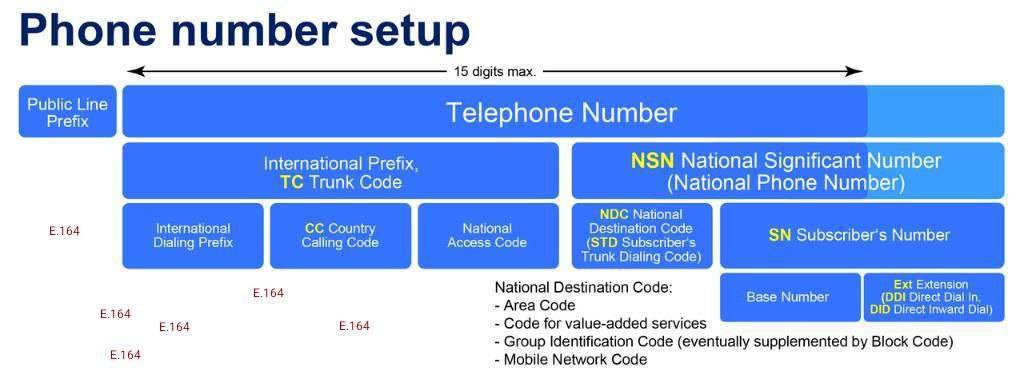
global sim identifier:
Voice#
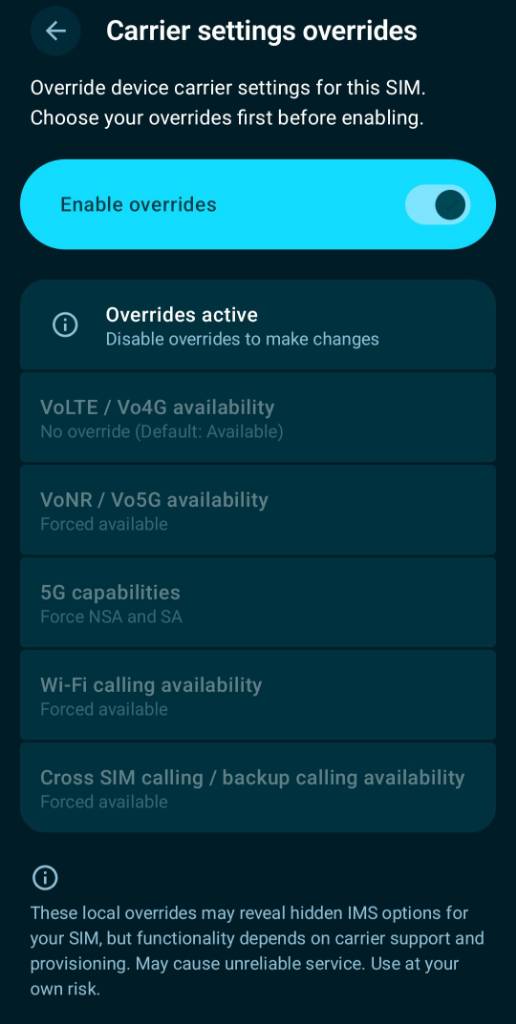
if you use 4G-only, 4G/5G-only or 5G-only then you’re using VoLTE/VoNR which is an encrypted IPsec tunnel to a carrier server over TCP/IP (mobile data)
voNR (SA and NSA) > voWifi?
https://en.wikipedia.org/wiki/List_of_5G_NR_networks
https://en.wikipedia.org/wiki/Voice_over_NR
SMS#
IMS/SIP via IpSec?? https://support.apple.com/en-us/104972
e2ee-rcs is an unspecified extension by Google, works only on google’s servers, imessage gateway to rcs, apple gets plaintext maybe
https://news.ycombinator.com/item?id=43813083
https://www.youtube.com/watch?v=miXRoy-5LLo
https://www.macrumors.com/2026/02/16/ios-26-4-rcs-encryption-testing/
https://www.wired.com/story/5g-security-stingray-surveillance/
https://zetier.com/5g-imsi-catcher/
https://www.eff.org/pages/cell-site-simulatorsimsi-catchers
Video#
https://jitsi.org/e2ee-in-jitsi/
https://support.google.com/meet/answer/12387251?hl=en
https://element.io/blog/secure-video-conferencing-for-matrix/
https://support.apple.com/en-in/guide/security/seca331c55cd/web
eSIM “server”#
https://discuss.privacyguides.net/t/privacy-differences-between-esim-vs-physical-sim/32629/4
VpnHotspot#
Graphene OS then
https://projectblack.io/blog/google-pixel-root-guide/
then
https://github.com/Mygod/VPNHotspot
then
https://codeberg.org/luxferre/lexipwn
Starlink?#
having a buffer router is the way to go.
https://letters.empiresec.co/p/starlink